
Rakija
Živjeli! Dobrodošli! One word covers a dozen different drinks — rakija is the fruit brandy that sits at the center of hospitality across Croatia, Serbia, Bosnia & Herzegovina, and Montenegro.
What Is Rakija?
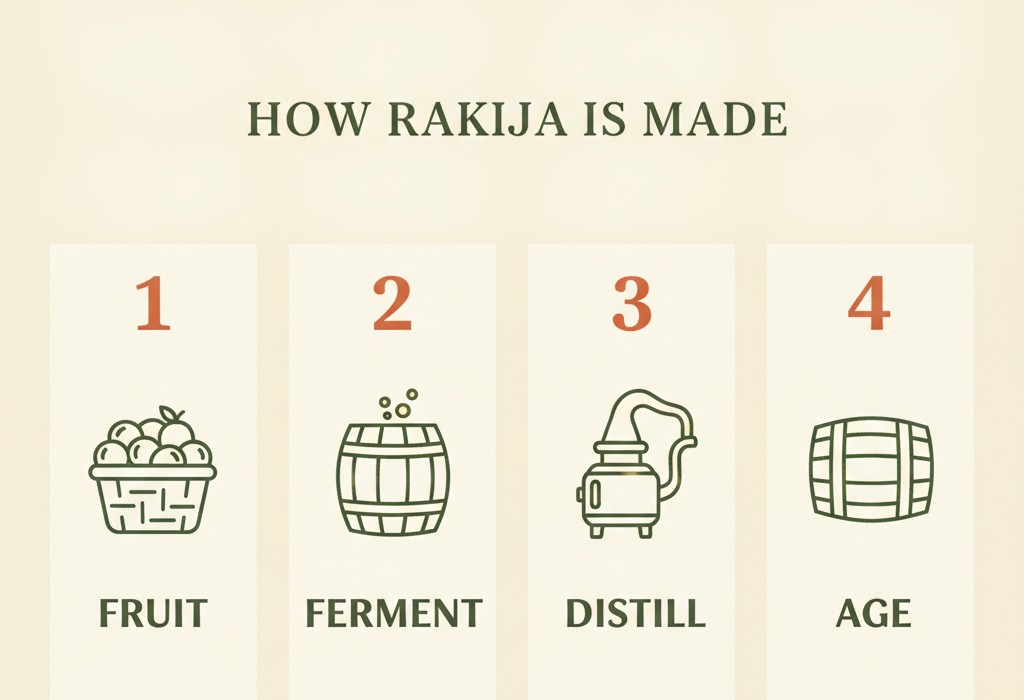
Rakija is the umbrella term for fruit brandy made across the Balkans — distilled from fermented fruit, most iconically plum, though almost any orchard fruit will do. It's not one drink so much as a family of them: the base spirit, the fruit, and the region all shift what ends up in the glass, from a clear, fiery Šljivovica to an herb-steeped Travarica that tastes more like a walk through a Dalmatian hillside than a shot of anything.
What doesn't change is what it's for. Rakija isn't really a cocktail ingredient or a Friday-night drink here — it's a greeting. Offered the moment you arrive, poured before the conversation starts, and treated with a little more ceremony than its strength might suggest.
A Spirit Older Than Borders: The History of Rakija
Distillation knowledge reached the Balkans centuries ago, likely carried along Ottoman trade and monastic routes, and it found perfect conditions here: fruit-heavy orchards, especially plums, and rural households with every reason to turn a glut of ripe fruit into something that keeps. What started as a practical way to preserve a harvest became something closer to a household craft passed down through generations — most rural families historically made their own, at least a little, and many still do.
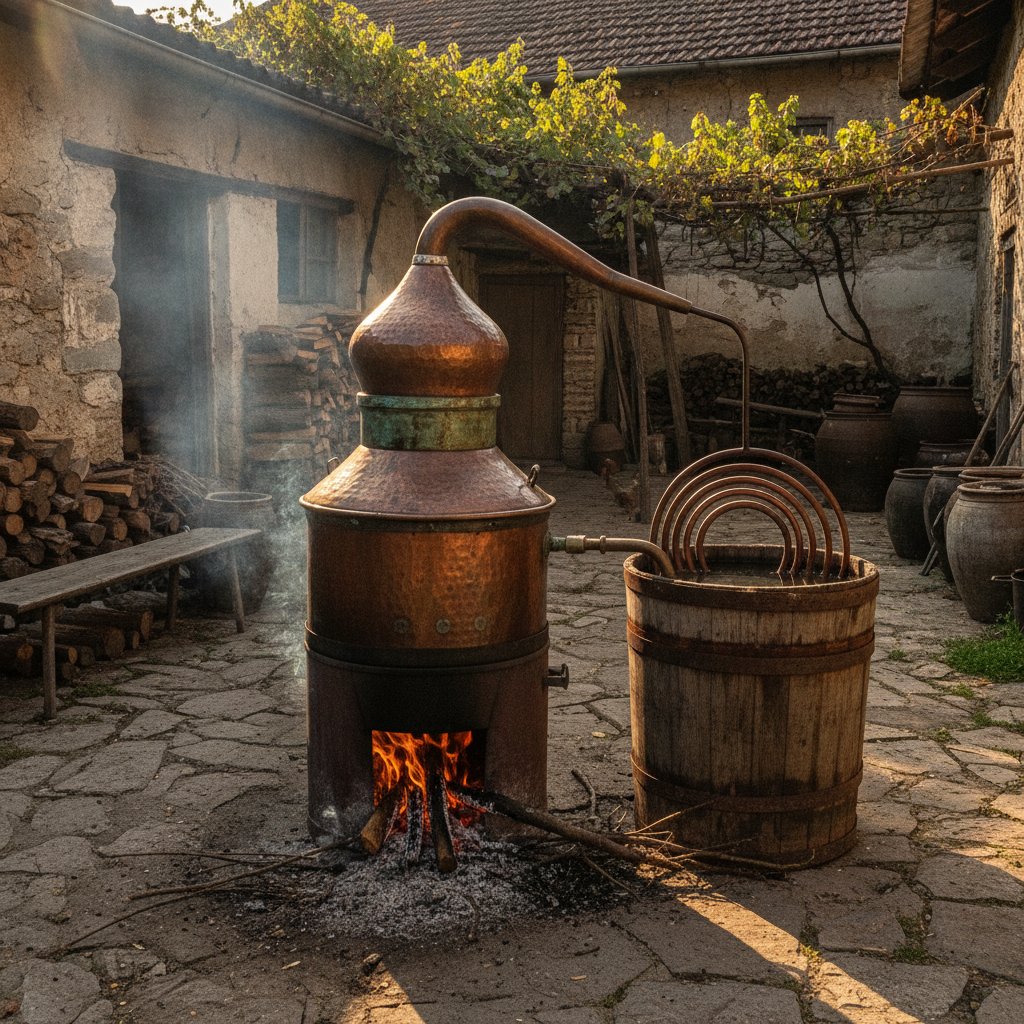
For most of its history rakija lived almost entirely outside formal industry — a home product, not a commercial one, made in small copper stills after the fruit harvest each autumn. That's changed somewhat in recent decades: the EU has recognized 12 Bulgarian rakia varieties and 6 Croatian rakija products with formal Protected Designation of Origin or Geographical Indication status, and commercial distilleries now bottle versions of drinks that were, for centuries, never meant to leave the village.
Rakija and Beyond: A World of Flavor
Saying "Rakija" is just the beginning — the flavour changes dramatically depending on the fruit it's made from. Šljivovica (plum) is the most iconic, but don't miss the aromatic Dunjevača (quince), the smooth Viljamovka (pear), or the bracing Travarica (herbal). Beyond straight fruit brandy, the region also produces liqueurs (likeri) made by infusing rakija with herbs, honey, or nuts — Pelinkovac (herbal bitter) and Medovača (honey liqueur) among the most popular.
| Type | Base | Typical ABV | Character |
|---|---|---|---|
| Šljivovica | Plum | 40–50% | Warm, fruity, the most iconic of them all |
| Kajsijevača | Apricot | 40–45% | Delicate and aromatic |
| Viljamovka | Williams pear | 40–45% | Smooth, floral |
| Dunjevača | Quince | 40–45% | Aromatic with a slightly tart edge |
| Lozovača / Loza | Grape | 40–45% | Closer in style to Italian grappa |
| Travarica | Herb-infused grape brandy | 40–45% | Bitter, medicinal, an acquired taste |
How to Drink Rakija Like a Local
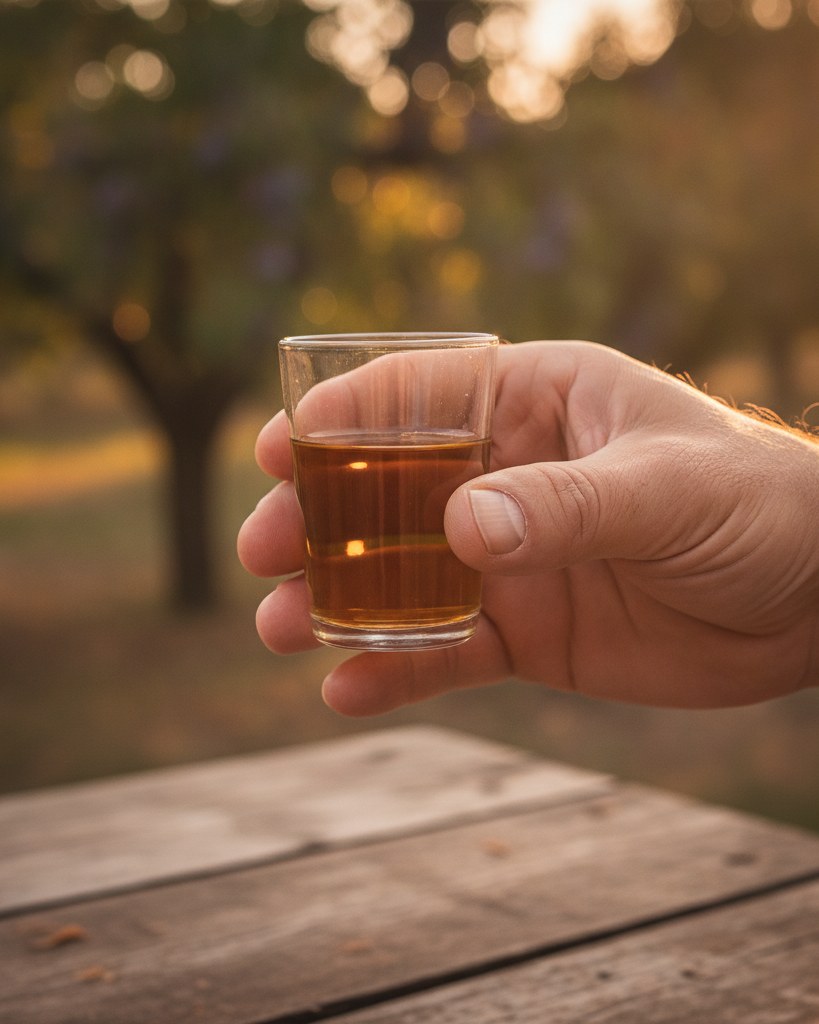
Rakija is served in small glasses — typically 30 to 50ml, not a full shot glass slammed back, but sipped with at least a little respect for something that's often 40%+ ABV. Unlike beer or wine, it's usually served at room temperature rather than chilled. And it almost never arrives alone: expect a small plate alongside it — pickled vegetables, a slice of cheese, cured meat — since rakija is as much a social ritual as a drink.
That ritual starts before you've even decided you want a drink. Being offered rakija is how hospitality gets expressed here, and in parts of Montenegro and rural Serbia, a small glass with morning coffee isn't unusual at all. Whatever the hour, the same rule applies as with beer and wine: don't drink before the toast.
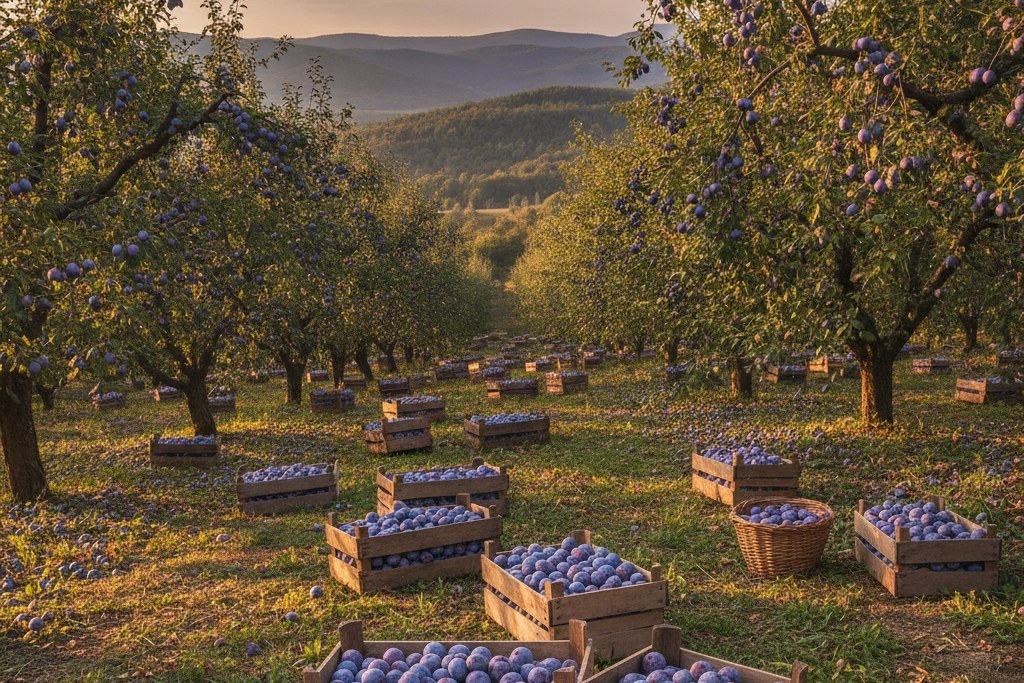
Every glass starts somewhere far less glamorous than the table it ends up on — usually an orchard like the one below, weeks before the fruit ever gets near a still. Most producers won't tell you exactly which plum trees make it into their best batch, but they'll all agree the fruit matters more than the equipment.
Rakija by Country
The base idea is shared across the region, but the details aren't — different countries favour different fruits, different local specialties, and different serving customs. Pick a country below to go deeper.
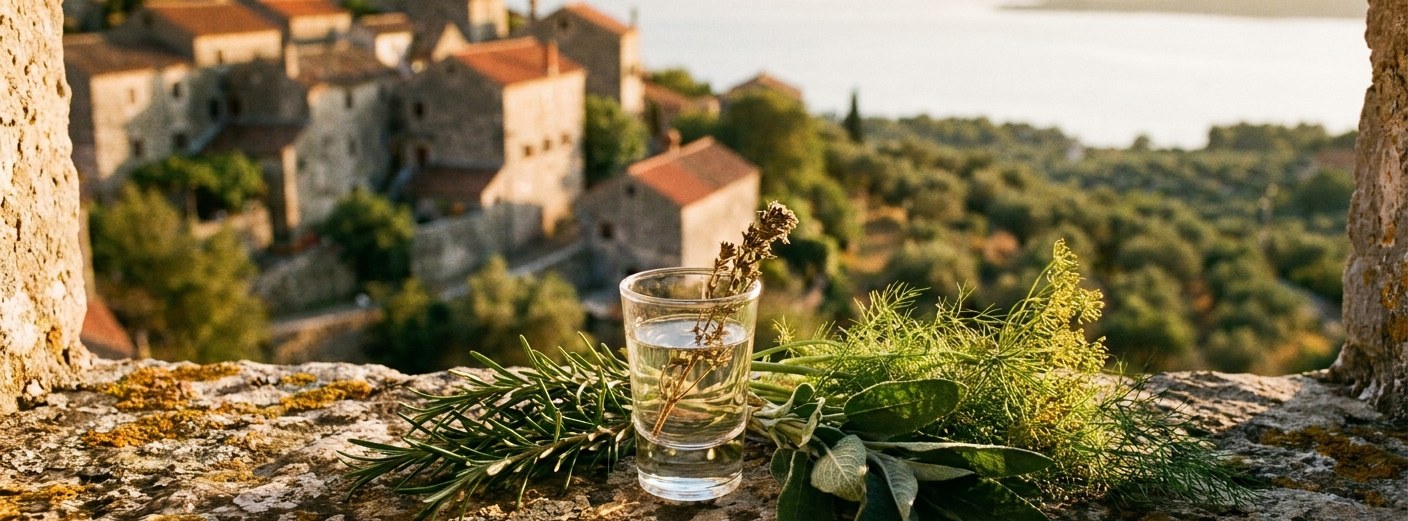
Croatian Rakija
Herb-infused Travarica and the wormwood bitter Pelinkovac — Dalmatia's answer to a house welcome, and Badel's 1862 recipe once supplied European royal courts.
View Profile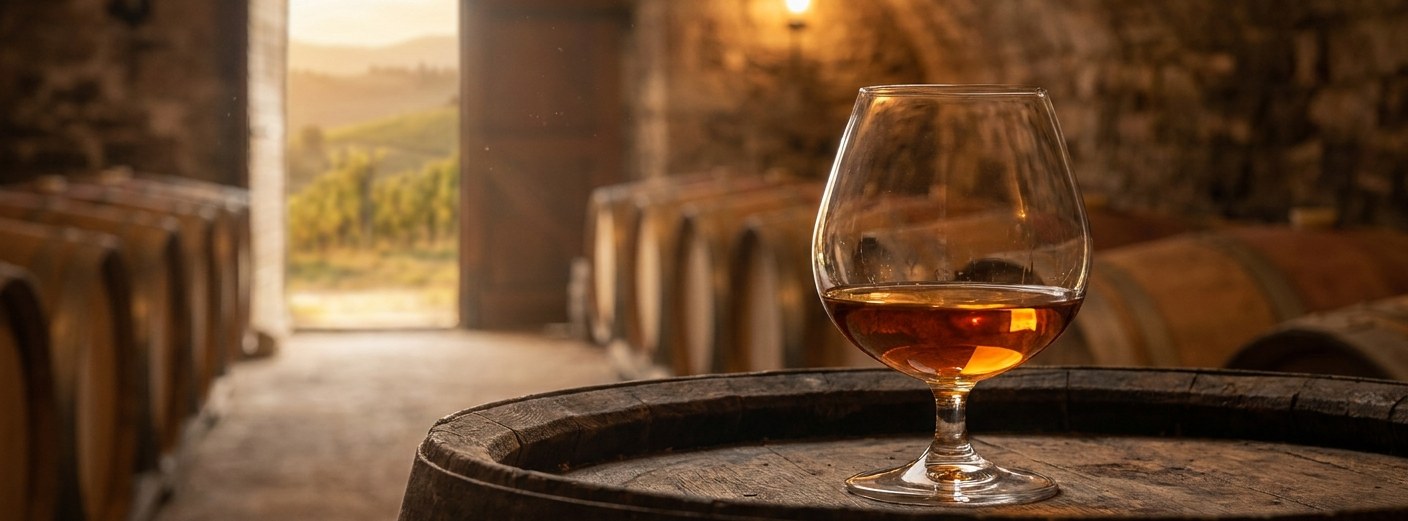
Serbian Rakija
Oak-aged Vinjak from Rubin in Kruševac, once sold as Cognac until EU law said otherwise, alongside the delicate homemade pear brandy Viljamovka.
View Profile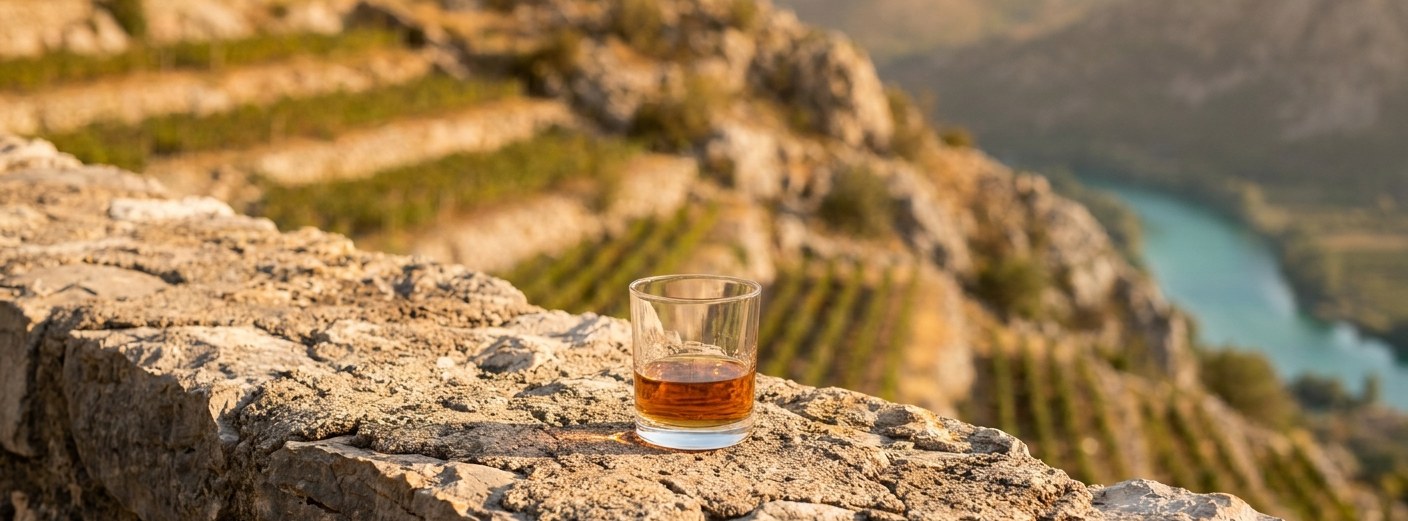
Bosnian Rakija
Herzegovina's grape brandy Loza, double-distilled from Žilavka and Blatina pomace in the karst hills around Čitluk and the Neretva valley.
View Profile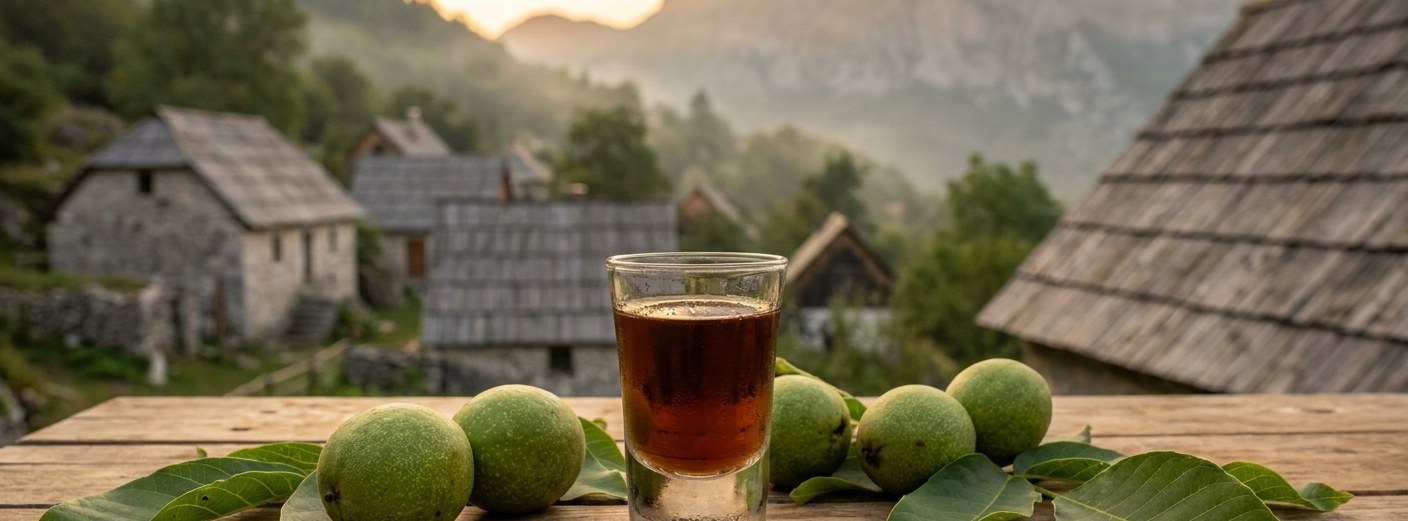
Montenegrin Rakija
Lozova Rakija since the 15th century, and Orahovac, the dark walnut liqueur tied to Njeguši village hospitality below Mount Lovćen.
View ProfileFrequently Asked Questions
What is rakija made of?
Rakija is made by fermenting fruit — most iconically plum — then distilling it, traditionally in a small copper still (kazan). Apricot, pear, quince, grape, and herb-infused versions are all common too.
How strong is rakija?
Commercial rakija typically runs 40–50% ABV, though homemade versions are often distilled stronger, sometimes reaching 50–65% or more. It's meant to be sipped, not treated like a standard shot.
What's the difference between rakija and slivovitz?
They're essentially the same drink under different names. "Slivovitz" is the more internationally recognized spelling (used in English and German), while "Šljivovica" is how it's written and said across the former Yugoslav countries. "Rakia" is the Bulgarian spelling of the same broader family.
Is rakija the same in every Balkan country?
The base idea is shared, but the details vary — different countries favour different fruits, different ABV ranges, and different serving customs, and several specific varieties now carry EU-recognized regional protection (12 in Bulgaria, 6 in Croatia).
How should rakija be served?
In a small glass (30–50ml), at room temperature, usually alongside a small snack like pickled vegetables or cheese, and always after a toast — never before.
Živjeli! (Cheers!) Pick a country above and keep exploring the strong, flavourful world of Balkan rakija.