Montenegrin Rakija
Zdravo! In Montenegro, rakija traditions run back to the 15th century, and a visit to the mountains isn't complete without a welcome shot before the introductions even start.
Montenegro's rakija culture stretches back further than almost anywhere else in the region — records place it in the country since the 15th century. The base fruit varies by household, from grapes and plums to pears, quinces, and apples, but two things set Montenegrin rakija apart from its neighbours: a grape brandy that's the default rather than the exception, and a walnut liqueur bound up in one of the country's most famous villages.
Lozova Rakija: The Everyday Pour
While Šljivovica claims the "most iconic" title across most of the Balkans, in Montenegro it's Lozova Rakija — grape brandy — that's the most common variety poured. It follows the same fermentation-then-distillation process as every other rakija, but the country's wine-growing character, led by the mighty Vranac grape, makes grape the natural starting point rather than an alternative to plum.
Orahovac: Njeguši's Walnut Liqueur
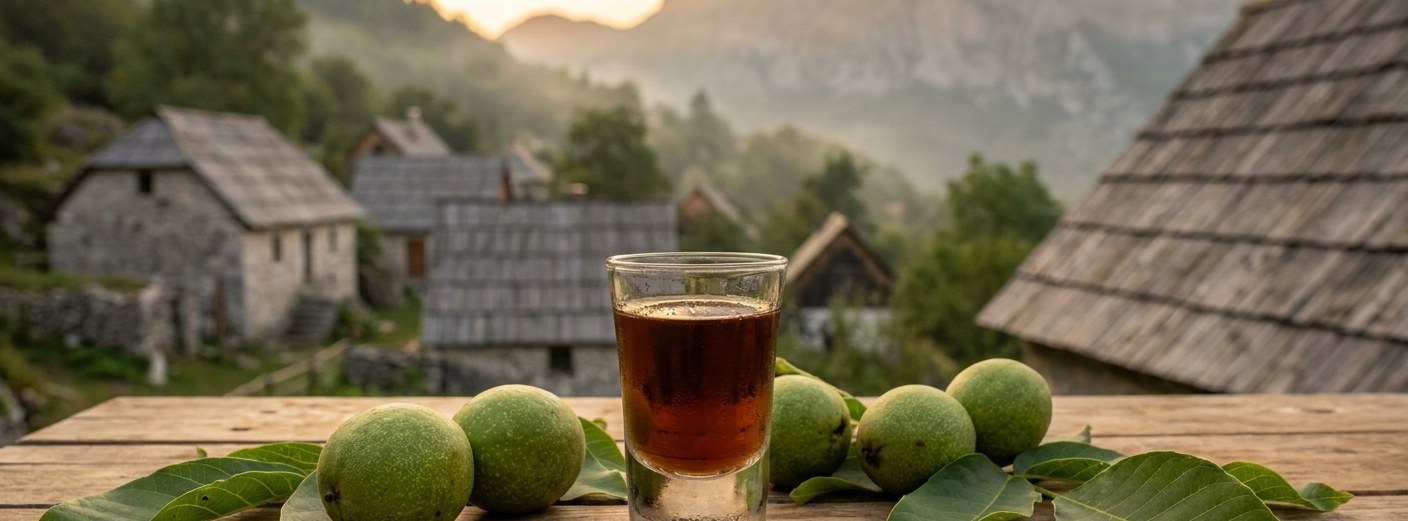
Orahovac is something else entirely — a dark, rich liqueur made by steeping whole green walnuts in rakija (traditionally Loza) for 30 days or longer, until the spirit takes on a deep brown colour and a bittersweet, almost coffee-like depth. It's strongly associated with Njeguši, the small mountain village below Mount Lovćen better known internationally for its smoked prosciutto and cheese — a village where a visit traditionally opens with a welcome shot of rakija before the smokehouse tour even begins.
Perfect Pairings: Montenegrin Rakija at the Table
- Lozova Rakija + Njeguški Pršut: The classic Montenegrin opener — a small glass of grape rakija alongside smoked mountain ham, often the first thing offered on arrival.
- Orahovac, neat, after dinner: Its rich, bittersweet depth makes it a natural digestif, sipped slowly rather than shot.
- Orahovac + Dark Chocolate: The walnut liqueur's coffee-like notes pair naturally with something equally rich.
- Lozova Rakija + Njeguški Cheese: The clean grape spirit cuts through the cheese's saltiness without overwhelming it.
Frequently Asked Questions
What is the most common rakija in Montenegro?
Lozova Rakija, made from grapes, is the most common variety — a reflection of the country's strong wine-growing tradition, though plum, pear, quince, and apple versions all exist too.
What is Orahovac made from?
Orahovac is made by steeping whole green walnuts in rakija, traditionally Loza, for 30 days or more, producing a dark brown, rich, bittersweet liqueur.
How old is Montenegro's rakija tradition?
Records place rakija-making in Montenegro back to the 15th century, making it one of the region's longest-running rakija traditions.
Živjeli! Back to the full Rakija guide to explore the rest of the region.