Serbian Beers & Brews
Živeli! A social cornerstone, a nod to history, and the perfect accompaniment to a good time — Serbia brews around 523 million liters a year, ranking as the world's 43rd largest producer.
As your trusty beer explorer, I've found that Serbians have a serious appreciation for beer. While Rakija might be the national spirit, beer holds its own! Recent data shows consumption around 54.7 - 62.2 liters per person each year.
While maybe not the highest in the Balkans, they're major players in production! Serbia is the 43rd largest beer producer in the world, brewing around 5.65 - 5.85 million hectoliters annually. They're clearly brewing enough to share!

Apatinska Pivara
Brewer of Jelen Pivo, Serbia's most popular domestic beer, since 1756 — one of Europe's oldest operating breweries.
View Profile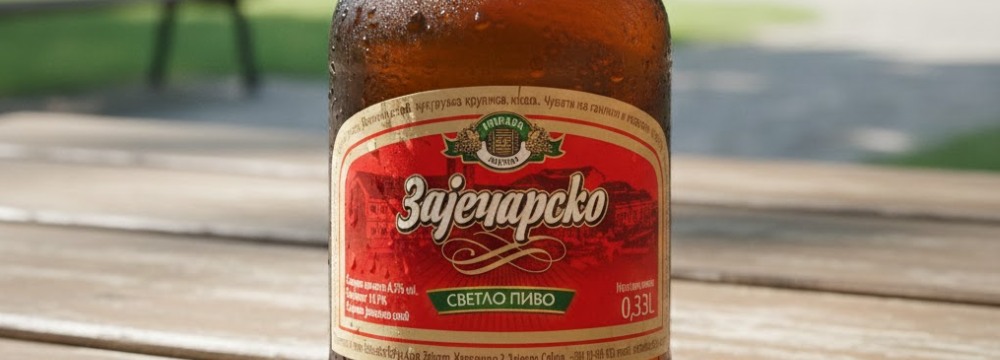
Heineken Srbija
Heineken's Serbian arm — brewer of Lav Pivo and the crisp, wheaty Zaječarsko Svetlo.
View Profile
Carlsberg Srbija
Home to Lav Pivo and a beer museum in Čelarevo modeled after Carlsberg's Copenhagen headquarters.
View Profile
Kabinet Brewery
Built its name on SuperNova — a fruit-bomb IPA that tastes more of mango and tangerine than hops.
View Profile
Dogma Brewery
Belgrade's uncompromising craft brewery, bold and bitter by design.
View Profile
The Black Turtle
A Serbian craft brewery keeping things crisp, clean, and unfussy — no gimmicks, just a well-made pale lager.
View Profile
Crow Brewery
Riding the new wave of Serbian haze — hazy, juicy, and intensely aromatic craft styles.
View Profile
Docker Brewery
Novi Sad's industrial-spirited brewery and pub, a cornerstone of the city's craft scene.
View Profile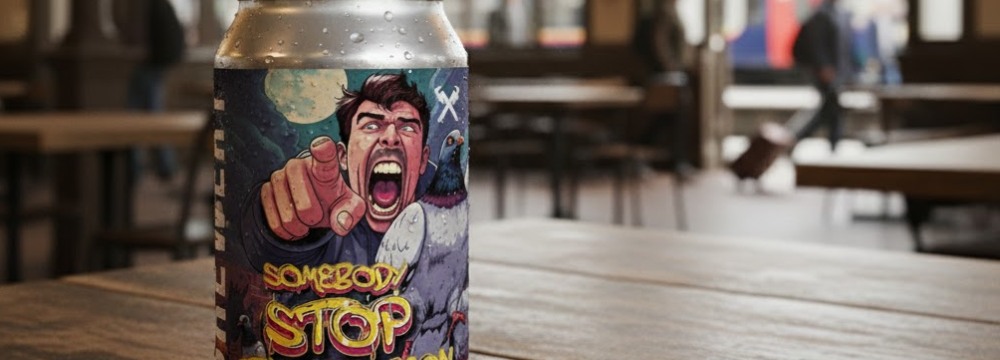
Mehanika Brewery
A brewery where brewing is treated like a science — meticulously designed, engineered for pure enjoyment.
View ProfileFrom History to Hoppy
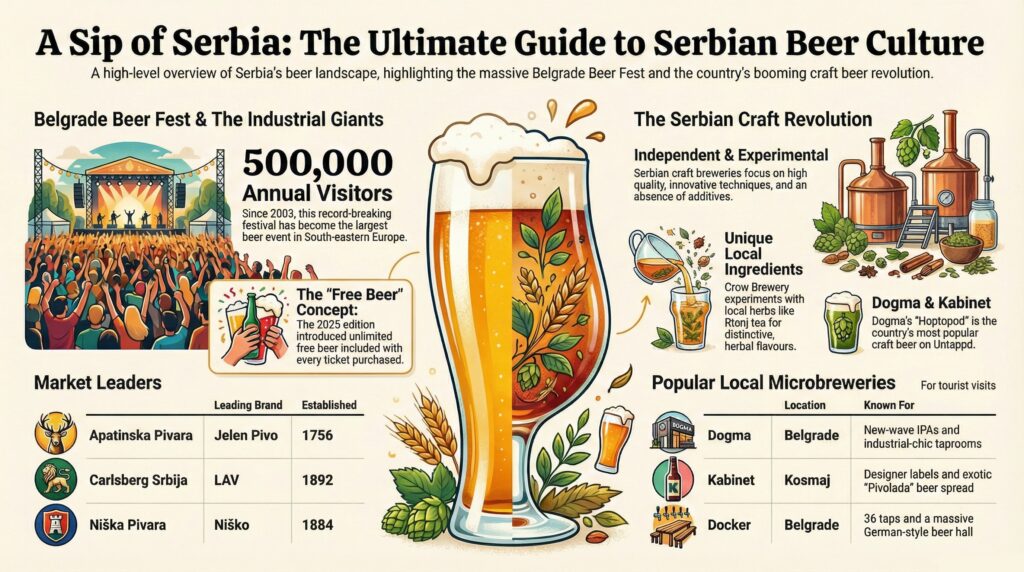
Serbian brewing history goes back centuries, with monasteries playing an early role. Industrial brewing took off in the 19th century, giving rise to the large breweries that produce the classic lagers you'll find everywhere today – the reliable, crisp go-tos perfect for any occasion.
Did you know one of Serbia's major breweries, Carlsberg Srbija in Čelarevo, has a beer museum dedicated to its founder, Lazar Dunđerski? It's designed after the one at Carlsberg headquarters in Copenhagen – a little piece of Danish brewing history in Serbia!
Fast forward, and Serbia, particularly Belgrade and Novi Sad, has a booming craft beer scene. Independent breweries are bringing exciting IPAs, stouts, and unique flavours to the mix. It's a dynamic scene where tradition meets innovation.
The Usual Suspects & New Faces
You'll definitely encounter the big names like Jelen Pivo and Lav Pivo. These are your classic, refreshing lagers – clean, balanced, and perfect with food.
Then there's the growing craft crew – breweries like Dogma Brewery, Kabinet Brewery, and many others, each adding their own personality with diverse styles from hoppy ales to rich porters.
Culture & Chow
Beer in Serbia isn't just a beverage; it's deeply integrated into social life. It's the default order in countless kafanas and bars, the companion to live music, and the perfect partner for food. A cold lager is practically mandatory with Ćevapi, Pljeskavica, or a hearty Serbian grill. Craft beers offer new pairing adventures, but honestly, most Serbian food seems happy to share a table with a local brew.

Finding Your Pour
You won't struggle to find the major lagers – they're everywhere! For craft beers, seek out specialized bars, bottle shops, or the breweries themselves, especially in cities like Belgrade and Novi Sad.
So next time you're in Serbia, or spot a Serbian beer abroad, remember the history, the stats, and the sheer local love poured into every glass.
If you really want to understand the scale of Serbia's love for beer, you need to see it in a festival setting. "Manifestations" (festivals) are a huge part of Serbian culture, and the ones dedicated to beer draw hundreds of thousands of visitors annually.
Belgrade Beer Fest: The Main Event
Held every August at Ušće Park (where the Sava and Danube rivers meet), the Belgrade Beer Fest is not just a festival; it is a massive cultural institution.
- The Vibe: It is one of the largest beer festivals in Southeastern Europe, often drawing over 500,000 people over five days.
- The Beer: You will find everything from the industrial giants (Jelen, Lav, Zaječarsko) to a dedicated "Craft Beer Land" featuring local microbreweries.
- The Music: Entrance is usually free (or very cheap), and the stage features huge regional rock and pop acts. It is loud, dusty, crowded, and an absolute rite of passage for any beer lover visiting Belgrade.
Dani Piva (Beer Days) in Zrenjanin
While Belgrade holds the biggest party, the city of Zrenjanin holds the tradition. Founded in 1986, Dani Piva is one of the country's oldest festivals.
- Why Go: Located in the Vojvodina region (Serbia's agricultural heartland), this festival feels more traditional. Expect folk dancing, competitions for the "best fish soup" (riblja čorba), and a heavy focus on the city's brewing heritage. It usually takes place in late August.
Novosadski Festival Zanatskog Piva (Novi Sad Craft Beer Festival)
For those who prefer quality over quantity, Novi Sad hosts an excellent craft beer festival, usually at the SKCNS Fabrika venue.
- The Crowd: This is for the true hop-heads. It's smaller, intimate, and focused entirely on the independent brewing scene. It's the perfect place to chat with the brewers from Dogma, 3bir, and Razbeerbriga while sampling small-batch experimental ales you won't find in supermarkets.

Serbian Beer Industry Statistics
Serbia quietly churns out hundreds of millions of liters every year, ranking as a legitimate brewing powerhouse in the global landscape. But here's what makes it interesting: they're brewing way more than they're drinking themselves. A huge chunk crosses borders into Bosnia, Montenegro, Croatia, and beyond—even reaching Serbian communities in Germany, Austria, and North America.
The brewing landscape is dominated by household names. Jelen and Lav aren't just beers—they're cultural institutions. Between the major breweries and smaller regional operations, the market concentration is stark, but it creates the consistency Serbians have come to expect from their daily pivo.
Then there's the festival scene. The Belgrade Beer Fest isn't some niche gathering—it's a massive cultural event that takes over the city each August, drawing crowds that would make many European capitals jealous. Combine that with traditional festivals like Zrenjanin's Dani Piva (running since 1986), and you see a country that doesn't just drink beer—it celebrates it.
The craft revolution is brewing too, even if the numbers are still small. Walk through Belgrade's Savamala or Novi Sad's center, and you'll find serious brewpubs like Dogma, Kabinet, and Salto pouring IPAs and experimental brews that would've been unthinkable a decade ago.
Key Serbian Beer Statistics
| Category | Figure | Context |
|---|---|---|
| Annual Production | 523 million liters | Enough to fill 210 Olympic pools |
| Global Rank | 43rd largest producer | Significant for a nation of 6.6M people |
| Annual Exports | 138 million liters | 26% of total production |
| Per Capita Consumption | 54.7 – 62.2 liters/year | About 1 liter per week per person |
| Market Concentration | 95% by 3 breweries | Apatin, Heineken Srbija, Carlsberg |
| Top Brand | Jelen (Apatinska Pivara) | Most popular domestic beer |
| Second Brand | Lav (Carlsberg) | ~23% market share |
| Belgrade Beer Fest | 500,000+ visitors | 5 days each August |
| Oldest Brewery | Pančevo (1722) | Over 300 years of brewing |
| Major Export Destinations | Bosnia, Montenegro, Croatia | Plus diaspora markets (Germany, Austria, USA, Canada) |
FAQ
What is the most popular Serbian beer?
Jelen Pivo is the most popular Serbian beer brand, brewed by Apatinska Pivara since 1756. This 4.6% ABV pale lager dominates the Serbian market and is instantly recognizable by its deer logo. Lav Pivo, produced by Carlsberg Srbija, is the second most popular brand, holding approximately 23% of the market share. Both are classic European pale lagers—crisp, refreshing, and perfect with traditional Serbian grilled meats like ćevapi and pljeskavica.
Where can I buy Serbian beer outside of Serbia?
Serbian beer is exported to over a dozen countries and can be found in several places internationally. Bosnia and Herzegovina, Montenegro, and Croatia are the main export destinations. Serbian beer is also available in Germany, Austria, the United States, and Canada, particularly in areas with Serbian diaspora communities. Online retailers like Total Wine & More, Wine-Searcher Marketplace, and specialty European importers stock brands like Jelen Pivo. Check local European specialty stores or Balkan grocery shops in major cities.
What styles of Serbian beer are available?
Serbian beer styles include: Pale Lager (Svetlo Pivo) – the most popular style, light and refreshing, perfect for social gatherings; Dark Lager (Crno/Tamno Pivo) – rich, malty flavor from roasted malts, available from brands like Lav and Zaječarsko; Wheat Beer (Pšenično Pivo) – unfiltered with a cloudy appearance and fruity taste with hints of banana and clove; Craft Styles – IPAs, stouts, sours, and pale ales from breweries like Dogma, Kabinet, Salto, and others in Belgrade and Novi Sad.
How much beer does Serbia produce annually?
Serbia produces 523 million liters of beer annually, making it the 43rd largest beer producer in the world. This is impressive for a nation of 6.6 million people. Of this production, approximately 138 million liters (26% of total output) is exported to neighboring countries and international markets. The Serbian beer industry is dominated by three major breweries—Apatinska Pivara, Heineken Srbija, and Carlsberg Srbija—which control 95% of the market.
What's the difference between Jelen and Lav beer?
Both Jelen and Lav are pale lagers, but they have distinct characteristics. Jelen Pivo (4.6% ABV) is brewed by Apatinska Pivara using homegrown Serbian ingredients, with a slightly maltier, bread-like profile and hints of citrus. It's the market leader and most widely available. Lav Pivo (produced by Carlsberg Srbija) has a cleaner, crisper taste with more pronounced hop bitterness. Lav holds about 23% of the market. Both are excellent with Serbian cuisine, though locals often have fierce loyalty to one or the other—it's like a friendly rivalry that's been going on for decades.
Are there craft breweries in Serbia?
Yes! Serbia has a growing craft beer scene, particularly in Belgrade and Novi Sad. Notable craft breweries include Dogma Brewery, Kabinet Brewery, Salto, 3bir, Razbeerbriga, Mehanika, Docker, Crow, and The Black Turtle. These breweries produce IPAs, stouts, sours, pale ales, and experimental seasonal beers. While craft beer represents a small percentage of the market (the big three breweries control 95%), the craft scene is expanding rapidly among younger, urban consumers. You'll find craft beer at specialized bars, bottle shops, and the breweries themselves, especially in city centers.
What food pairs well with Serbian beer?
Serbian beer pairs beautifully with traditional Balkan cuisine. Pale lagers like Jelen and Lav are perfect with grilled meats: ćevapi (skinless sausages), pljeskavica (Serbian burger), karađorđeva šnicla (breaded rolled meat), and ražnjići (kebabs). Dark lagers complement heavier dishes like sarma (stuffed cabbage rolls) and hearty stews. Wheat beers work well with lighter fare, salads, and seafood. Craft IPAs cut through the richness of ajvar (red pepper spread) and aged Serbian cheeses. The classic combination is any Serbian beer with warm bread, kajmak (dairy spread), and Njeguški pršut (smoked ham).
What is the Belgrade Beer Fest?
Belgrade Beer Fest is one of the largest beer festivals in Southeastern Europe, held every August at Ušće Park where the Sava and Danube rivers meet. The festival attracts over 500,000 visitors across five days, featuring both major industrial breweries and a dedicated "Craft Beer Land" section for microbreweries. Entrance is typically free or very cheap, with the main stage hosting major regional rock and pop acts. It's a massive cultural event that perfectly captures Serbian beer culture—social, energetic, and proudly local. There's also Dani Piva (Beer Days) in Zrenjanin, founded in 1986, which takes a more traditional approach with folk culture and brewing heritage.
How old is Serbian brewing tradition?
Serbian brewing dates back centuries, with monasteries playing an early role in beer production. The oldest operating brewery, Pančevo, was founded in 1722—over 300 years ago. Apatinska Pivara followed in 1756, making it one of Europe's oldest breweries still in operation. Zaječar Brewery opened in 1895. Industrial brewing took off in the 19th century, giving rise to the classic lagers that dominate today. After challenges during the Yugoslav breakup in the 1990s, the industry recovered in the 2000s with a craft beer movement that's revitalizing Serbia's brewing scene and capturing international attention.
Is Serbian beer expensive?
Serbian beer is quite affordable, especially compared to Western European prices. In supermarkets, a 500ml bottle costs around €1.20, while 2-liter plastic bottles run about €2.60. At cafes and bars, expect to pay approximately €1.70 for a 330ml bottle or €2.50 for a 500ml draught beer. Craft beers are slightly more expensive but still reasonable by international standards. At the Belgrade Beer Fest and other events, prices drop even further. This affordability is part of why beer is so integrated into Serbian social culture—it's accessible for daily enjoyment, not just special occasions.