Croatian Liqueurs: Pelinkovac, Maraschino and the Rest of the Cabinet
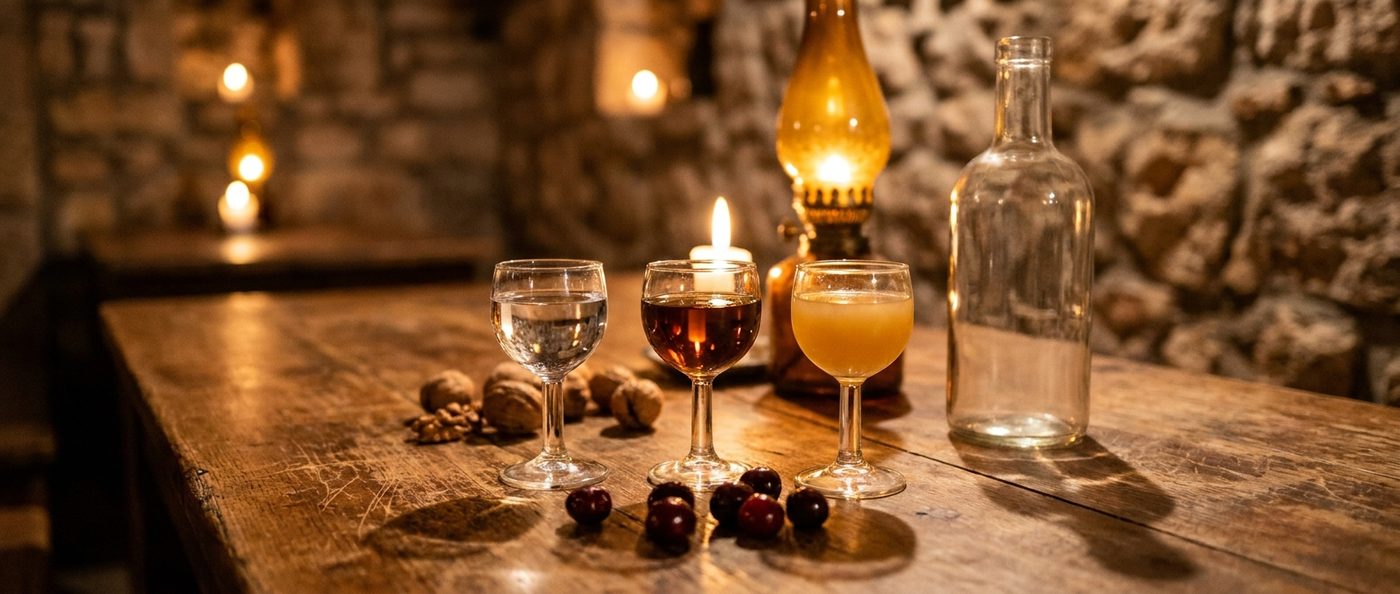
Bok! Dobrodošli! Rakija gets the headlines, but open a Croatian drinks cabinet and you'll find wormwood from Zagreb, sour cherries from Dalmatia, green walnuts picked in early summer and red wine turned into dessert in Istria.
The Short Version
- The famous one abroad: maraschino, the clear cherry liqueur of Zadar.
- The one locals actually order: pelinkovac, a bittersweet wormwood liqueur served cold.
- The dessert ones: kruškovac (pear), višnjevac (sour cherry) and medica (honey).
- The home-made one: orahovac, from green walnuts.
- The Istrian one: teranino, a liqueur built on Teran red wine.
- Strength: most sit between 24% and 35% ABV, well below a typical rakija.
What's the Difference Between Croatian Liqueurs and Rakija?
Sugar, mostly. Croatian rakija is a dry fruit brandy, usually 40% ABV or more, with nothing added to sweeten it. A liqueur starts with a spirit, takes on fruit, herbs or nuts, and is sweetened before bottling, which also brings the strength down.
The line blurs at home, because a family making orahovac or višnjevac often starts with their own rakija, and people will call nearly anything in an unlabelled bottle "rakija" regardless. Travarica sits right on the border: it is a herb-steeped rakija, drier and stronger than the drinks on this page, so it lives in the rakija guide. If you came looking for it, the Croatian Rakija page covers it island by island.
Croatian Liqueurs by Region
Croatia is a small country with very different landscapes, and the drinks track them closely. If you remember one thing, make it this: the coast, the capital and the plains each have their own bottle.
It helps to sort them by taste too, since that is the question you'll actually face at the bar.
Pelinkovac: Croatia's Bittersweet Wormwood Liqueur
Pelinkovac takes its name from pelin, wormwood, and tastes the way that sounds: bitter first, then herbal and gently sweet, closer to an Italian amaro than to anything fruity. It is the drink on this page you are most likely to be poured in an actual Croatian bar, usually as an aperitif before lunch or to settle things after it.
The story belongs to Zagreb. In 1862 the entrepreneur Franjo Pokorny bought a local beverage factory and built a business around his pelinkovac, which won a silver medal at the 1867 Paris World Exhibition and, according to the company that descends from his, reached the court of Napoleon III. That company is now Badel 1862, and it makes the two best-known versions.
| Bottle | ABV | What sets it apart |
|---|---|---|
| Badel Pelinkovac Gorki | 31% | The everyday classic. Badel calls it Croatia's oldest and best-selling herbal liqueur. Gorki means bitter. |
| Badel Antique Pelinkovac | 35% | The premium bottle, launched in 2007 for the company's 145th anniversary, with 40-plus Mediterranean plants. |
| Maraska Pelinkovac | 28% | The Zadar version, lighter and common on US shelves. |
How to drink pelinkovac
Cold, without ice. Keep the bottle in the fridge or freezer and pour a small measure, with a slice of lemon or orange if you like. Bartenders also treat it like any other amaro, so try it in place of the bitter element in a spritz or a Negroni-style drink.
Maraschino: The One the Rest of the World Knows
If a Croatian liqueur is sitting in a foreign bar, it's probably this one. Maraschino is a clear liqueur distilled from sour marasca cherries, and it began in Zadar, which helps explain why cocktail lists in New York quietly depend on a Dalmatian fruit. It is drier and nuttier than people expect, and nothing like a jarred red cherry.
Zadar's Maraska still makes it, while the best-known bottle comes from Luxardo, a family firm that left the city after the Second World War. It's a story worth a page of its own, so I gave it one: read the full maraschino liqueur guide for the history, the best substitutes and four classic cocktails.
Kruškovac and Višnjevac: The Fruit Liqueurs
Kruškovac is pear liqueur, from kruška. It is golden, sweet and soft, and usually arrives with dessert or after a meal, often at someone's grandmother's insistence. Maraska and Badel both bottle it, at around 24–25% ABV. Note that the name works differently from Viljamovka, which is a dry pear brandy and belongs with rakija.
Višnjevac is sour cherry liqueur, from višnja. It's dark red, with enough acidity to keep the sugar honest, and it turns up in home cabinets all over Slavonia as much as in shops. Badel's version sits at 25% ABV. Unlike maraschino, the fruit is the whole point here: this one tastes exactly as cherry as it looks.
Orahovac: Green Walnut Liqueur
Orahovac is made from walnuts picked green and unripe in early summer, before the shell hardens. They are cut, steeped in spirit with sugar and spices for a period traditionally given as around 40 days, and then filtered. The result is almost black, with a bitter, resinous nuttiness and a sweet finish. It is usually taken after a meal as a digestif.
It is as much a home project as a commercial product, and every family recipe is the correct one. Maraska's bottled version runs at 28% ABV. Italians call the same idea nocino, and neighbouring Montenegro has its own orahovac tradition too.
Istria's Specialities: Teranino, Medica and Biska
Istria deserves a section of its own, because its distillers made a local style out of what was already growing there.
- Teranino is built on Teran, the region's dark, iron-edged red wine, blended with brandy, fruit or spices. It's low in strength (Aura's version is around 16% ABV), and the town of Bale holds an event in its honour.
- Medica is honey and grape spirit. It's sweet and warming, and it isn't mead, since it starts from a spirit rather than fermented honey.
- Biska is a mistletoe-based herbal brandy, pale and gently bitter with a hint of anise. Strictly speaking it's closer to a rakija than a liqueur, but you will meet it in the same glass.
Elsewhere on the coast look out for rogač, a carob liqueur. And then there's prošek, which isn't a liqueur at all but a sweet Dalmatian dessert wine from sun-dried grapes. Despite the name, it has nothing to do with Prosecco, a point Italian producers and Croatian winemakers have been arguing over in Brussels for years.
How Strong Are Croatian Liqueurs?
Most land between 24% and 35% ABV, so they drink lighter than rakija but stronger than wine. These are figures from producers and retailers for specific bottles, and they can change, so go by the label.
What to Buy: Croatian Liqueurs Worth Taking Home
You will find the widest range in Croatian supermarkets, and the Maraska and Badel bottles below cost less there than anywhere else. Outside Croatia, try specialist liquor stores or Balkan delis. In the US, Maraska's line is the easiest to find. This list is by purpose and isn't a ranking.
| If you want | Look for | Why |
|---|---|---|
| A first bottle for cocktails | Maraska or Luxardo Maraschino | The one with the most uses, and the drink with the best story |
| The authentic bar order | Badel Pelinkovac Gorki | What a Zagreb regular means by pelinkovac |
| A gift | Antique Pelinkovac | Premium bottle, higher strength, and it looks the part |
| Something for dessert | Maraska Kruškovac | Sweet and gentle, and easy on newcomers |
| Something after a heavy meal | Maraska Orahovac | Bitter walnut works well as a digestif |
| A souvenir from Istria | Teranino | Tastes of the place, and hard to find elsewhere |
What to eat with them
- Pelinkovac: before grilled fish, or after a rich lunch on its own.
- Maraschino: a few drops over fruit salad, or in a cake syrup.
- Kruškovac: with strudel, or with a mild, creamy cheese.
- Orahovac: with dark chocolate or walnut cake.
- Teranino: with chocolate desserts, or poured over vanilla ice cream.
Frequently Asked Questions
What is the most famous Croatian liqueur?
Internationally, maraschino from Zadar is the most famous, thanks to classic cocktails like the Aviation and the Last Word. Within Croatia, pelinkovac is the one you are most likely to see ordered at a bar.
What is the traditional alcohol of Croatia?
Rakija is the traditional spirit of Croatia, especially herb-infused travarica and plum šljivovica. Among liqueurs, the traditional choices are pelinkovac, maraschino, kruškovac, orahovac, višnjevac, and medica.
What is pelinkovac?
Pelinkovac is a bittersweet herbal liqueur based on wormwood, usually 28–35% ABV. It is similar to an Italian amaro, popular in Croatia and its neighbours, and served chilled as an aperitif or digestif.
How do you drink pelinkovac?
Serve it cold but without ice, in a small glass, before or after a meal. A slice of lemon or orange is a common addition.
Is Gorki List Croatian?
No. Gorki List is a wormwood liqueur that originated in Subotica, Serbia, and is now produced under Slovenian ownership. It is often confused with Badel Pelinkovac Gorki, which is made in Zagreb, Croatia.
What is kruškovac?
Kruškovac is a sweet Croatian pear liqueur, usually around 24–25% ABV, typically served after a meal or with dessert.
What is orahovac?
Orahovac is a dark liqueur made by steeping unripe green walnuts in spirit with sugar and spices. It is a popular digestif and a common home-made drink in Croatia, and is also made in Montenegro.
What is the difference between rakija and a Croatian liqueur?
Rakija is an unsweetened fruit brandy, usually 40% ABV or more. A liqueur is a spirit flavoured with fruit, herbs, or nuts and then sweetened, usually 16–35% ABV.
What should I bring home from Croatia?
Maraschino from Zadar and pelinkovac from Zagreb are the classic choices. Teranino from Istria and a Dalmatian prošek are good if you want something harder to find at home.
Živjeli! Start with something bitter, finish with something sweet, and leave the green-walnut argument to the grandmothers. For the stronger side of the cabinet, head to the Croatian Rakija guide.