Bosnian Rakija
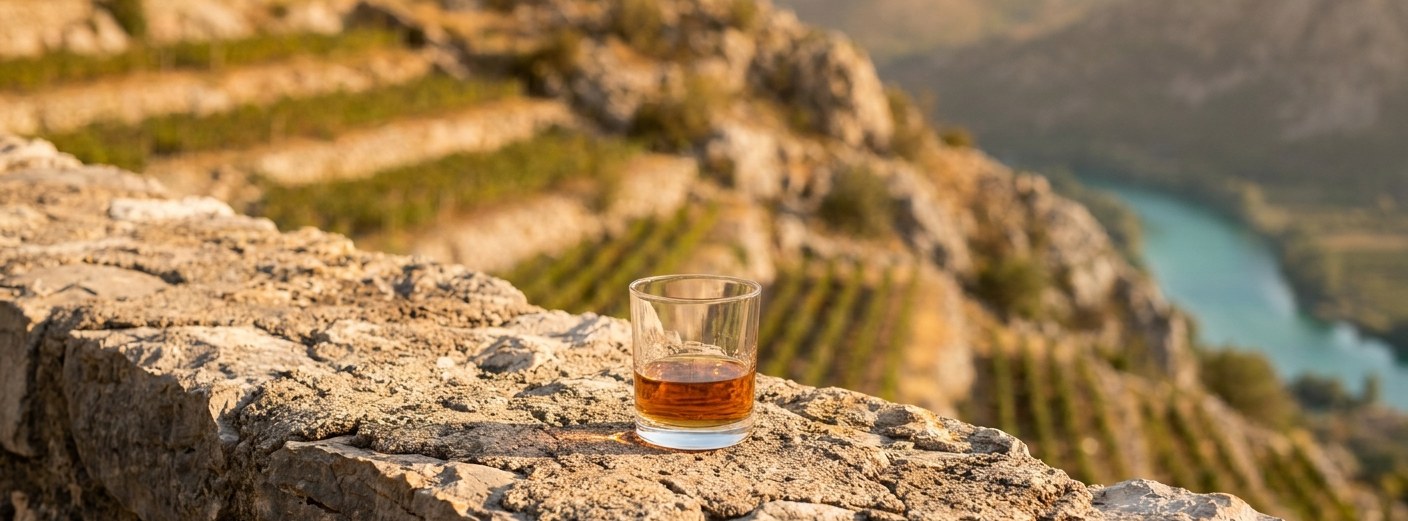
Dobar dan! In the karst hills around Čitluk and the Neretva valley, rakija means grape before it means anything else.
Bosnia and Herzegovina's rakija story splits cleanly in two. In the continental north, it's the same plum-first household tradition found across the region — a bottle in nearly every rural kitchen, distilled after the autumn harvest. In Herzegovina's warmer, rockier south, wine country takes over, and the region's defining spirit isn't plum at all. It's Loza.
Loza: Herzegovina's Grape Brandy
Loza is distilled from grape pomace — the skins, seeds, and stems left over from winemaking — or sometimes from whole grapes, making it the Balkan cousin of Italian grappa. But Herzegovina's warmer climate and its indigenous grape varieties, Žilavka and Blatina, give it a character that doesn't really map onto grappa at all: slightly floral, smooth when it's made well, with a clean burn that warms rather than sears.
The heartland of Loza production runs through the Neretva valley and the hills around Čitluk, Međugorje, and Stolac, where families have distilled grape rakija for generations using copper pot stills. The best Loza is double-distilled and then rested — not in oak, but in glass — for at least a year before it's ready to drink. That's a deliberate choice: oak would compete with the delicate floral character the grape itself provides.
Loza is traditionally served neat, at room temperature, and it carries the same weight in Bosnian and Herzegovinian hospitality that Travarica carries in Dalmatia — a drink you're handed, not one you order.
Šljivovica in the North
Move north out of Herzegovina's wine country and grape gives way to plum. Bosnia's continental interior follows the same household-distilling tradition found across Serbia and Croatia — small copper stills, an autumn harvest, and a bottle that's rarely bought rather than made. It's less regionally distinctive than Loza, but it's the more common bottle in an everyday Bosnian home.
Perfect Pairings: Bosnian Rakija at the Table
- Loza + Herzegovinian Prosciutto (Pršut): Dry-cured, wind-aged ham from the Neretva valley alongside a small glass of Loza is the region's classic opening.
- Loza + Young Sheep's Cheese: The grape brandy's floral lightness suits a fresh, salty cheese far better than an aged one.
- Šljivovica + Grilled Ćevapi: A shot before the meal, in the same household style found across the wider region.
- Loza, neat, as a welcome: Don't expect a menu to offer it — it's more often simply poured the moment you sit down.
Frequently Asked Questions
What is Loza made from?
Loza is distilled from grape pomace or whole grapes, most often the indigenous Žilavka and Blatina varieties grown in Herzegovina. It's the Balkan equivalent of Italian grappa, but with a distinct floral character from its local grapes.
Where is Loza made in Bosnia?
The Neretva valley and the hills around Čitluk, Međugorje, and Stolac are considered the heartland of Loza production.
Why is Loza rested in glass instead of oak?
Oak aging would add wood tannins and flavour that compete with the grape's own floral character, so the best Loza is rested in glass for at least a year instead.
Živjeli! Back to the full Rakija guide to explore the rest of the region.